
 All Categories
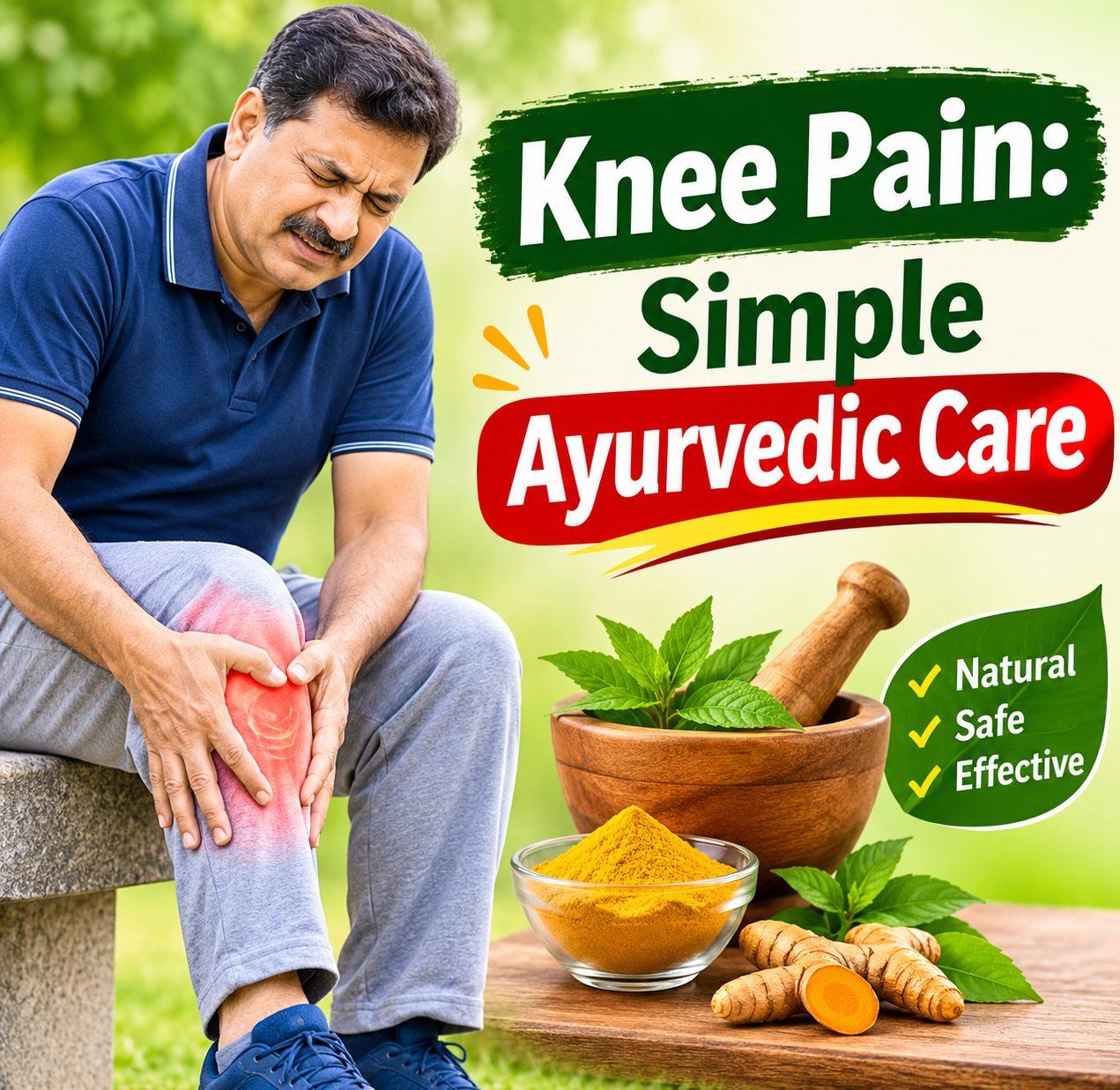
Knee Pain: Simple Ayurvedic Care, Yoga and Daily Habits for Better Joint Comfort
Introduction
Knee pain is one of those problems that slowly starts disturbing everyday life. First, it may be a little stiffness while climbing stairs. Then sitting cross-legged becomes difficult. Sometimes even standing up from a chair feels uncomfortable. The good thing is that in many cases, regular movement, better diet, weight management, gentle yoga, and Ayurvedic support may help improve knee comfort over time.
Knee pain should not be ignored, especially if it is severe, sudden, linked to an injury, or comes with swelling and difficulty walking. But for common stiffness, age-related discomfort, mild swelling, or lifestyle-related joint weakness, a steady daily routine can make a meaningful difference.
Why Knee Pain Happens
The knee carries much of our body weight. Every time we walk, climb stairs, squat, or sit on the floor, the knee joint works hard. Over time, pain may develop because of weak muscles, excess body weight, poor posture, old injury, swelling, arthritis, or lack of regular exercise.
In Ayurveda, joint pain is often linked with imbalance of Vata dosha, which is associated with dryness, stiffness, cracking sounds, and pain in the joints. When the body becomes inactive, digestion weakens, or toxins accumulate, joint discomfort may increase. Modern health guidance also supports regular knee-friendly exercise because strengthening the muscles around the knee can help support the joint and improve movement.
You might have noticed that knee pain often feels worse in the morning, during cold weather, after long sitting, or after sudden overexertion. This is why the solution should not be only about pain relief. The real focus should be on strengthening, reducing stiffness, improving circulation, and correcting daily habits.
What Helps in Knee Pain Naturally?
1. Gentle Movement Is Important
Many people stop moving when they have knee pain. Some rest is needed during acute pain, but complete inactivity can make stiffness worse. Simple movements improve blood flow and keep the joint active.
Swami Ramdev ji, in his yoga guidance for knee health, emphasizes regular practice according to one’s capacity. He explains that the body stays healthier when it is used properly and consistently. Simple practices like gentle squats, leg movements, and selected yoga postures may support strength and flexibility when done carefully.
For a better understanding of the yoga practice, you may refer to Swami Ramdev ji’s video guidance.
Start slowly. If pain increases sharply, stop and modify the movement.
2. Strengthen the Muscles Around the Knee
The knee does not work alone. The thigh, hip, calf, and lower back muscles all support it. Weak thigh muscles can put extra pressure on the knee. That is why simple strengthening exercises are useful.
You can try:
- Chair sit-and-stand: Sit on a chair and stand up slowly without using hands.
- Gentle wall support squats: Go only as low as comfortable.
- Straight leg raise: Lie down and lift one straight leg slowly.
- Ankle rotation and knee bending: Good for mild stiffness.
Do these slowly. The aim is not to show strength in one day. The aim is to build support over weeks.
Yoga for Knee Pain: Keep It Simple and Safe
Yoga can be helpful when done with awareness. In the video summary shared, Swami Ramdev ji mentions practices like simple baithak, dand-baithak variations, chakki asana, paad vrittasana, and bhujangasana as part of a broader routine for strength and overall health.
For beginners or people with pain, the key is modification. You do not need to do deep squats or fast movements. Even slow, controlled movements can help.
A simple knee-friendly yoga approach may include:
- Start with ankle rotation and gentle knee bending.
- Do slow chair-supported baithak if comfortable.
- Practise bhujangasana for spine and body flexibility.
- Try paad vrittasana gently to improve leg mobility.
- End with deep breathing for relaxation.
Param Pujya Swami Ramdev ji also explains this practice in detail in the linked video. View Here
Avoid forcing the knee into painful positions. If you have advanced arthritis, ligament injury, severe swelling, or recent surgery, consult a qualified doctor or yoga therapist before doing knee exercises.
Ayurvedic and Home Remedies for Knee Pain
Warm Oil Massage
Warm oil massage is a simple traditional practice for stiffness and mild discomfort. Massage around the knee gently, not aggressively. Warmth may help relax the area and improve comfort.
For herbal support, Patanjali Divya Peedanil Taila or Patanjali Peedantak Pain Reliever Ointment may be considered for external application where suitable. Patanjali’s official product information describes Peedantak Ointment as useful for muscular and joint pain, including knee pain. (Patanjali Ayurved)
Use such products as part of a balanced routine, not as a replacement for movement, diet, or medical care.
Castor Leaf Warm Compress
Acharya Balkrishna ji has shared a traditional remedy using erand leaves for knee pain and swelling. The method is simple: apply a pain-relieving oil on castor leaves, warm them slightly, place them on the affected knee, and wrap with a warm cloth at night. This may help in mild swelling and stiffness for some people. For video, click here
Do not apply very hot leaves. Also avoid this remedy if there is skin allergy, wound, infection, or unexplained severe swelling.
Internal Ayurvedic Support
People looking for Ayurvedic support may also consider Divya Peedantak Vati where suitable, preferably after consulting an Ayurvedic physician, especially if they are already taking medicines or have chronic health conditions. Patanjali lists Divya Peedantak Vati as an Ayurvedic medicine product. (Patanjali Ayurved)
Diet Habits That May Support Knee Health
Food plays a quiet but important role. If digestion is weak and weight increases, knee discomfort may worsen. Try to keep meals simple, warm, and easy to digest.
Include:
- Moong dal, vegetable soups, and light khichdi
- Sesame seeds, almonds, and walnuts in moderation
- Haldi, methi, ginger, garlic, and ajwain in food
- Seasonal fruits and cooked vegetables
- Enough water through the day
Reduce excess fried food, cold drinks, packaged snacks, too much sugar, and overeating at night. For many Indian families, late heavy dinners are common. But the body feels lighter when dinner is simple and early.
Weight management is also important. Even a small reduction in excess weight may reduce pressure on the knees.
A Simple Daily Routine for Knee Pain
Morning
Wake up and drink warm water. Sit quietly for a few minutes and breathe deeply. Then do ankle rotation, gentle knee bending, and slow leg raises for 5–7 minutes.
If comfortable, add chair-supported sit-and-stand movements. Keep the speed slow. The knee should feel warm, not strained.
Afternoon
Avoid sitting continuously for long hours. If you work at a desk, stand up every 45–60 minutes. Walk slowly for two minutes. Small habits matter.
Evening
Take a gentle walk for 15–20 minutes if pain allows. After that, apply warm herbal oil like Divya Peedanil Taila around the knee and massage lightly. If swelling is present, avoid hard massage and seek medical advice.
Night
Keep dinner light. If stiffness is more, use a warm compress. You can also watch Swami Ramdev ji’s guidance on this simple routine in the video shared here.
When Should You See a Doctor?
Consult a qualified doctor if knee pain is severe, sudden, due to injury, or if there is major swelling, redness, fever, locking of the knee, inability to walk, or pain lasting for many days. Natural care is helpful, but serious symptoms need proper diagnosis.
Conclusion
Knee pain can make daily life uncomfortable, but small daily corrections can bring support. Gentle exercise, yoga, warm oil massage, simple food, better weight management, and Ayurvedic care may help improve comfort gradually.
The most important thing is regularity. Do not wait for pain to become severe. Start with small steps today. Your knees support your whole life; they deserve daily care.
FAQs
1. What is the best natural way to manage knee pain?
A combination of gentle exercise, warm oil massage, light diet, weight management, and yoga may help. The best approach is consistent daily care rather than one quick remedy.
2. Can yoga help in knee pain?
Yoga may support knee strength and flexibility when done carefully. Avoid deep or painful postures. Beginners should start with simple movements and modify as needed.
3. Is massage good for knee pain?
Gentle warm oil massage may help in stiffness and mild discomfort. However, avoid strong massage if there is swelling, injury, redness, or severe pain.
4. Which Patanjali product may support knee pain relief?
For external support, Patanjali Divya Peedanil Taila or Peedantak Ointment may be considered where suitable. For internal Ayurvedic support, Divya Peedantak Vati may be used under proper guidance.
5. When is knee pain serious?
Knee pain should be checked by a doctor if it is sudden, severe, due to injury, associated with swelling or fever, or if you cannot walk properly.


